Kovar Supplier
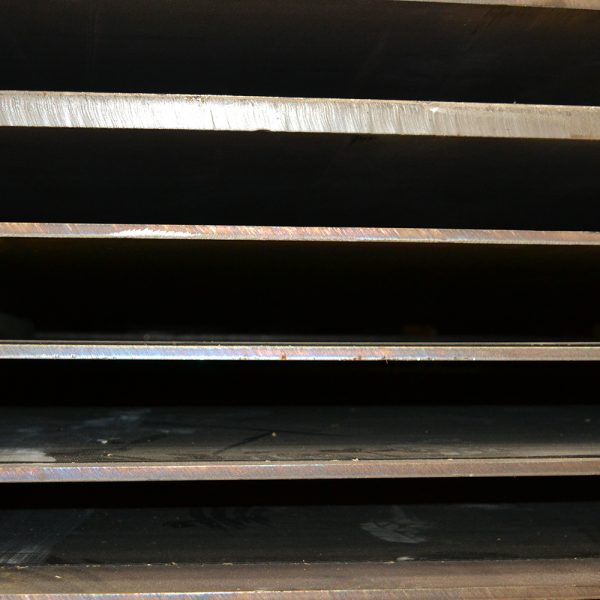
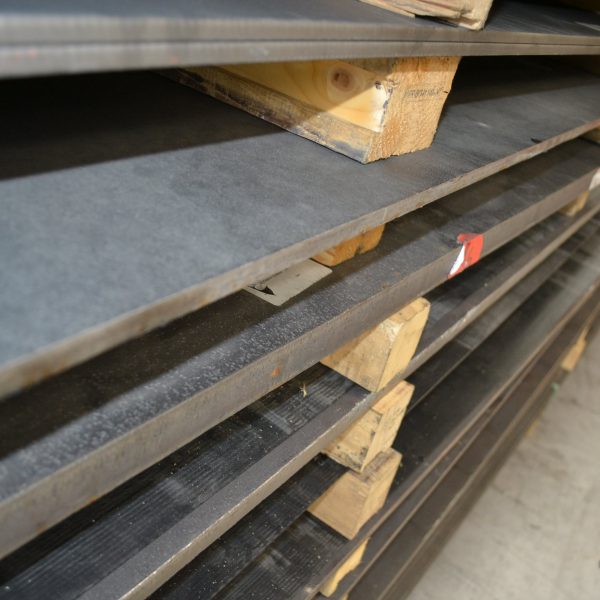
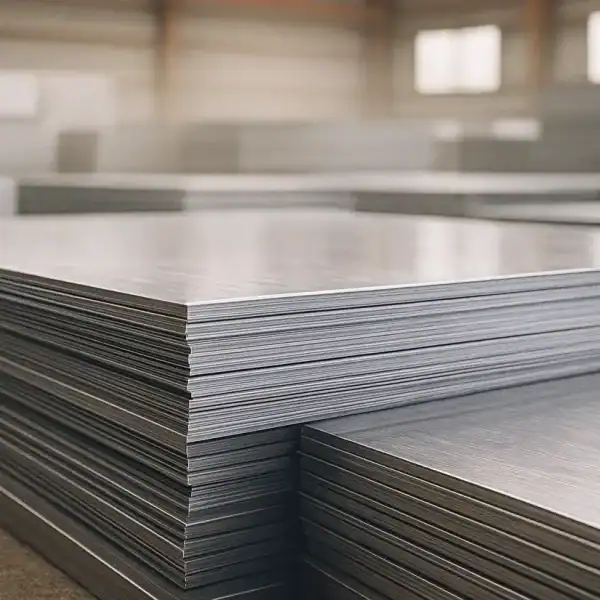
City Special Metals is a supplier and manufacturer of Kovar Alloy Products, including Kovar Plates, Bars, and Sheets. As well as Kovar, we are also widely known as Europe’s largest stockist of low and controlled-expansion alloys. Discuss your requirements by contacting our team today.
City Special Metals stock and supply a wide range of Kovar products and materials. Therefore, it should be no surprise that we know a lot about Alloy K too.
Head over to our insights pages if you’d like to read more about Kovar. We’ve written features about the Machinability of Kovar®, plus much more.
Ready to enquire with City Special Metals? We’re a leading UK based speciality metals stockist and always happy to help. Skip to our contact form below, fill in some details and also tell us about your Kovar Material requirements. Click here to skip down the page.

Kovar Stock
Kovar alloy is a nickel-iron-cobalt, controlled expansion alloy. Its expansion characteristics match both borosilicate (or Pyrex) glasses and alumina ceramics. This alone ensures it is a highly popular controlled expansion alloy for hermetic sealing applications (also known as Glass to Metals Sealing).
Alloy K (Kovar Metal)
Kovar is also commonly specified as Alloy K, NILO K, Fernico or UNS K94610. Its corresponding European material designation is Werkstoff 1.3981. Available forms include Kovar strips, plates, bars, sheets and Kovar foil, making the alloy suitable for precision components and dependable glass-to-metal or ceramic-to-metal sealing applications.
Some other industry terms for our Kovar supply include Dilver P1, Kovar 4J29, Pernifer 2918, Kovar Glass and Kovar ASTM F15.
| Product Form | Range From | Range To | |
|---|---|---|---|
 | Kovar Plate | 4mm | 210mm |
 | Kovar Round Bar | 4mm | 160mm |
 | Kovar Sheet & Coil | 0.025mm | 3.175mm |
 | Kovar Wire | 0.1mm | 3.175mm |
 | Kovar Tube | 3.175×0.254mm | 25.4×1.0mm |
Request a Quote
Kovar Properties
- Expansion Control
Reliable hermetic sealing applications - Uniformity
Precise and uniform thermal expansion characteristics - Shock-resistant
Their coefficient thermal expansion makes the seal resistant to shock and cracking
Kovar Applications
- Hermetic Sealing
- Electronic tubes (power, X-Ray)
- Hybrid circuit casings
- Oscillator housings
- Concentrated solar power
- Scientific instruments
Kovar Markets
- Aerospace
- Optical Lasers
- Semiconductors
- Solar
- Scientific
- Electronic
Kovar Composition
| Mechanical Properties | ||
|---|---|---|
| Metallurgical Condition | Annealed, Descaled | |
| Yield Strength | KSI (MPa) | 40 (276) |
| Tensile Strength | KSI (MPa) | 75 (518) |
| Hardness | HB | 78 |
| Elongation | 50mm | >20 |
| Co Efficient of Thermal Expansion | ||
|---|---|---|
| 30-300°C | 10-6/°C | 5 |
| 30-400°C | 10-6/°C | 5.15 |
| Density | g/cm³ | 8.26 |
| Curie Temp | °F (°C) | 815 (435) |
| Melting Point | °F (°C) | 2640 (1449) |
| Modulus of Elasticity at 20°C | MPa | 207 |
| Specific Heat | J/g- °C | 0.11 |
| Thermal Conductivity at 20°C | W/m.k | 17.3 |
| Thermal Expansion | W.m-¹°C | 0.17 |
| Electrical Resistivity | mm²/m | 49 |
| Poisson’s coefficient | 0.317 |
| Technical Specifications | |||
|---|---|---|---|
| ASTM | UNS | Werkstoff | AMS |
| F15 | K94610 | 1.3981 | I-23011 CL1 |
| Chemistry | ||
|---|---|---|
| Nickel | Ni | 29 |
| Cobalt | Co | 17 |
| Iron | Fe | Balance |
| Manganese | Mn | 0.5 |
| Silicon | Si | 0.2 |
| Carbon | C | 0.04 |
Speak to us
We can distribute metals across the globe, including locations in Europe, The Middle East, The Far East and the Americas.
Phone Us
+44 1909 519 189
Speak to the Sales Team
sales@cityspecialmetals.com
Ask Us A Question
info@cityspecialmetals.com

More about Kovar
Kovar has been in use for many decades as a controlled expansion alloy. However, despite its relatively long history, many people outside the engineering industry have never heard of Kovar.
What makes Kovar so unique is its coefficient of thermal expansion. As a controlled expansion alloy, it shared some remarkable similarities to borosilicate glass (hard glass) and ceramic.
Kovar’s coefficient of thermal expansion is not an accident, though. Going back in history, Kovar was carefully formulated to meet a specific need. In 2019 and beyond, City Special Metals supplies and manufactures Kovar to the highest standard. You can learn more about our Quality Assurances here.
Kovar is also known by the following trade names:
- Kovar®
- Pernifer 29-18®
- Dilaton 29-18® Dilver P®
- Dilver® NiCoFe®
- Telcoseal 1®
- Sealvar®
- Nilo K®
- Nicoseal®
- Nicosel®
- Therlo®
- FeNi29Co17®
Kovar Alloy FAQs
What is Kovar, and what are its key properties?
Kovar is a controlled-expansion alloy in the iron-nickel-cobalt family designed to have a coefficient of thermal expansion (CTE) closely matching that of borosilicate glass and other “hard” glass/ceramic materials.
Because of this matched expansion characteristic, it is widely used for hermetic glass-to-metal and ceramic-to-metal seals over a range of temperatures.
It also exhibits good mechanical strength, works well under thermal cycling, and can bond reliably to glass via controlled oxide layers (nickel/cobalt oxides) that promote wetting by molten glass.
What are the typical applications of Kovar?
Because of its matched thermal expansion and ability to form reliable seals with glass or ceramics, Kovar is widely used in electronics, optics and vacuum systems. Common applications include:
- X-ray windows, seals in lighting and display devices.
- Hermetic glass-to-metal or ceramic seals in vacuum tubes, x-ray tubes, microwave tubes, and other electron devices.
- Lead-in wires or feedthroughs through glass envelopes.
- Components in aerospace or satellite systems, sensors and optoelectronics, where matched expansion with optics or glass is critical.
What are the uses of Kovar Plate?
Kovar plate is typically used in structural or substrate applications where polished, flat surfaces or machined shapes are needed. For example, the plate form may serve as mounting bases or flanges that interface with glass windows or ceramic parts, or as backing plates in hermetic packages where machining or finishing is required.
What are the uses of Kovar Round Bar?
Round bar is often used for feedthrough pins, rods, or supports that pass through glass or ceramic seals. It can be machined into pins or leads, or used as structural supports within hermetically sealed devices.
What are the uses of Kovar Sheet?
Kovar sheet is used when thin, flat, sealed walls or covers are required, such as in lids, vacuum enclosures, or as thin membrane substrates. It can also be stamped or laser cut for packaging or sealing frames.
What are the uses of Kovar Coil?
Coil (strip) form of Kovar is useful for continuous processing, stamping, coil-fed forming of leads, or as a base for leadframe-style geometries that will later be cut to shape. It allows economical manufacturing of repeated small features.
What are the uses of Kovar Wire?
Kovar wire is used primarily for lead-in wires, springs, or extremely fine conductors that must traverse a glass or ceramic seal while maintaining matched expansion. It is also used in micro-electronic or optoelectronic lead frames.
What are the uses of Kovar Tube?
Kovar tube can be used as sealed tubes through which electrical or optical fibres pass, or structural tubes that interface with glass windows. Tubing offers a hollow geometry that can support internal wiring or act as a sealed passage.